

routines · 5 min read
Your first K-beauty routine
Four steps, morning and night. Start here before you add anything else.

Ten-step routines make great videos, but you don’t need one. Four steps cover what skin actually needs — clean, hydrated, moisturized and protected. Get these right first, then add extras one at a time.
Find your skin type first
Wash your face with a gentle cleanser, pat it dry, and leave it bare for about an hour. Then take a look in the mirror:
- Shiny all over — oily skin.
- Tight, flaky or rough — dry skin.
- Shiny through the forehead and nose, normal or dry elsewhere — combination skin.
- Comfortable, neither tight nor shiny — normal skin.
- Stinging, redness or itching after products — sensitive skin, which can overlap with any of the others.
One more to know: dehydrated skin. It’s short on water rather than oil, so even oily skin can feel tight and look dull. A hydrating toner and moisturizer usually help quickly.
Your skin type can shift with the seasons, so check again when the weather changes.
Morning
A gentle cleanse (or just water, if your skin is dry), a hydrating toner, a moisturizer, and sunscreen as the last step. If you only add one thing to your mornings, make it sunscreen.
Every morning
- Cleanse
- Tone
- Moisturize
- Sunscreen
Night
The same routine without sunscreen. If you wore sunscreen or makeup, start with an oil cleanser — it’s called the double cleanse.
Every night
- Oil cleanse
- Cleanse
- Tone
- Moisturize
What each step does
- Cleanser removes sunscreen, oil and the day’s grime without stripping your skin. COSRX Low pH Good Morning Gel Cleanser is a gentle first pick.
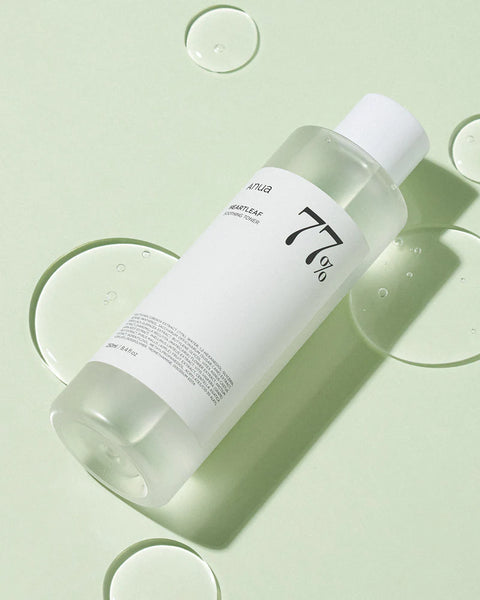
- Toner in Korean skincare is a watery first layer of hydration, not a harsh astringent. Try Anua Heartleaf 77% Soothing Toner.
- Moisturizer keeps that hydration in. Illiyoon Ceramide Ato Concentrate Cream works for face and body and suits dry or sensitive skin.
- Sunscreen every morning, rain or shine. Beauty of Joseon Relief Sun feels like a light moisturizer.
Get four steps right before you buy a fifth.
Starter picks by skin type
- Oily or combination: COSRX Low pH Good Morning Gel Cleanser, Anua Heartleaf 77% Soothing Toner, a light gel moisturizer like Isntree Hyaluronic Acid Aqua Gel Cream, and Isntree Hyaluronic Acid Watery Sun Gel.
- Dry: a gentle cleanser, a hydrating toner, Illiyoon Ceramide Ato Concentrate Cream, and a creamy sunscreen like Beauty of Joseon Relief Sun.
- Sensitive: fragrance-free products wherever you can, and a mineral sunscreen such as Dr.G Green Mild Up Sun.
Starting on a budget
If four products is too many to buy at once, start with three: a gentle cleanser, a moisturizer and a sunscreen. Add a hydrating toner when you’re ready — it makes everything after it spread more easily, but it’s the step you can most easily add later.
Multi-taskers help too. A light, creamy sunscreen can double as your morning moisturizer if your skin isn’t dry, and a cleansing balm can replace a separate makeup remover.
Reading labels as a beginner
Ingredients are listed from the highest concentration to the lowest, so the first few tell you most about a product. If your skin is sensitive, watch for fragrance (also listed as parfum) and for essential oils, and patch-test anything new. And don’t judge an ingredient list by its length — what matters is how your skin feels after a couple of weeks.
Adding more, slowly
Once the basics feel easy, add one new product at a time and give it a couple of weeks before you judge it. That way, if something doesn’t agree with your skin, you’ll know which one. Serums and essences go after toner and before moisturizer; a sheet mask can take that spot a few times a week.
A good order to add things in:
- A serum for your main goal, whether that’s hydration, dullness or texture.
- An exfoliant once or twice a week, if your skin feels rough.
- Masks and extras, whenever you want a treat.
Not sure what your skin needs? Our skin routine builder picks in-stock products for your skin type and goals.
Patch-test new products
Try anything new on a small area, like behind your ear or along your jaw, for a few days before using it all over — especially if your skin is sensitive.
Your first two weeks
Use the same four steps every morning and night, and change nothing else. In the first few days, notice how each product feels: does the cleanser leave you comfortable, does the moisturizer last until bedtime, does the sunscreen sit well under makeup? By the end of the second week you’ll know what to keep and where you want a little more help.
Beginner mistakes to skip
- Buying everything at once. If your skin reacts, you won’t know why.
- Skipping sunscreen on cloudy days. UV doesn’t take the day off.
- Over-cleansing. Tight, squeaky skin isn’t clean skin — it’s stripped skin.
- Too many actives. One exfoliant and one targeted serum are plenty to start with.
- Judging too early. Most products need a few weeks to show what they can do.
When to see a dermatologist
Skincare can do a lot, but not everything. If you have painful or persistent breakouts, a rash that doesn’t settle, or a sudden change in your skin, see a doctor or dermatologist — and bring your products along so they can see what you’re using.
Quick answers
How long should my routine take? About five minutes, morning or night. If it takes much longer, it’s probably more than you need right now.
Do I need a separate eye cream? Not to start. Your moisturizer can go around the eyes too, as long as it doesn’t sting.
What if my skin breaks out after a new product? Stop using it, go back to your basic four steps until your skin settles, and try something else later.


