

tips · 5 min read
Toner, essence or serum?
What each step does, and which one your skin actually needs.

They come in similar bottles, they’re all watery, and they all promise hydration. Here’s what actually sets them apart — and the good news is that you probably don’t need all three.
Part of the confusion is in the names. In Korea, toner is often sold as “skin” and a light moisturizing emulsion as “lotion”, while “essence”, “serum” and “ampoule” overlap from brand to brand. Texture and purpose tell you more than the label.
Toner: the prep step
In Korean skincare, toner is the first thing on after cleansing: a watery layer that adds hydration and helps the products after it spread more easily. Hydrating toners like Isntree Hyaluronic Acid Toner are gentle enough for morning and night.
Exfoliating toners with AHA or BHA do a different job. Use those a few times a week, not as your everyday hydrator.
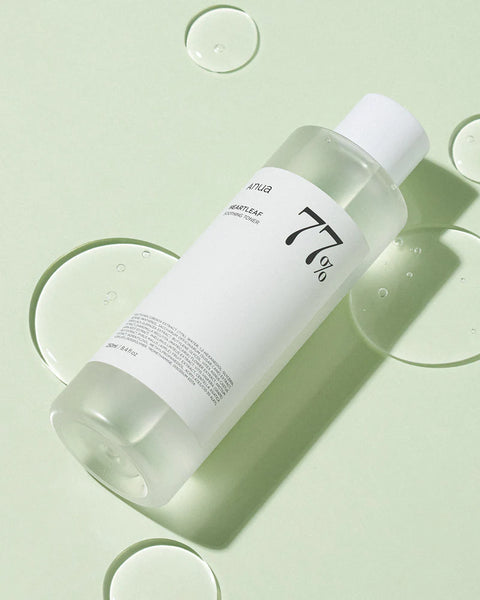
A few other kinds are worth knowing: soothing toners built around ingredients like heartleaf or centella, milky toners that feel closer to a light lotion — Anua Rice 70 Glow Milky Toner is one — and toner pads, pre-soaked for a quick swipe, like Anua Heartleaf 77% Clear Pad.
Essence: the hydration layer
Essences sit in between: a little richer than toner, a little lighter than serum. They’re there to boost hydration and give skin a bouncy, dewy look. COSRX Advanced Snail 96 Mucin Power Essence is the classic example: slippery, cushiony and easy to layer.
Essences became a K-beauty staple for a simple reason: they add a layer of hydration that’s lighter than a cream, so even oily skin can have that dewy look without feeling heavy.
Serum: the targeted step
Serums, and ampoules (their more concentrated cousins), carry ingredients chosen for a specific goal: hyaluronic acid for dehydrated skin, niacinamide for dullness and uneven-looking tone, retinoids for the look of fine lines. Torriden Dive-In Serum is all about hydration, while Beauty of Joseon Glow Serum pairs propolis with niacinamide.
An ampoule is used exactly like a serum — it’s simply more concentrated, and often comes in a smaller bottle.
Thinnest to thickest. That’s the only layering rule you need.
The order
- Toner
- Essence
- Serum
- Moisturizer
How to apply each one
- Toner: pour a little into your palms and press it into your skin, or sweep it on with a cotton pad. Dry skin can layer two or three thin coats — the Korean “7 skin method” takes that idea to the extreme.
- Essence: a few drops, patted in with your fingertips.
- Serum: two or three drops for your face and neck. Give it a moment to sink in before the next layer.
Morning and night
In the morning, keep it light: toner, a serum (vitamin C works well here), moisturizer and sunscreen. At night, you have more room: toner, an essence if you use one, a treatment serum — this is where a retinoid belongs — and a slightly richer moisturizer.
Not sure what to use when? Hydrating products work at either time of day. Anything that makes your skin more sensitive to the sun, like retinoids or strong exfoliating acids, belongs at night.
Which one do you need?
- Skin feels tight or dehydrated: a hydrating toner, plus an essence if you want more.
- You have one specific concern: a serum made for it. Add one at a time.
- Your routine already feels long: keep the toner and one serum, and let the essence go.
An ingredient cheat sheet
- Hyaluronic acid: hydration. You’ll find it in toners, essences and serums alike.
- Snail mucin: hydration with a cushiony, bouncy feel.
- Niacinamide: for skin that looks dull, uneven or shiny.
- Centella and heartleaf: soothing, for skin that looks red or stressed.
- Vitamin C: for brightness. Beauty of Joseon Light On Serum pairs it with centella.
- Retinoids: for the look of fine lines and texture. Use them at night, and wear sunscreen every morning.
Layering mistakes
- Too many serums at once. Two is plenty; more than that and products start to pill.
- Doubling up on strong actives. A retinoid and an exfoliating acid on the same night is a lot for most skin. Alternate them instead.
- Not waiting. Give each layer a moment to sink in — that’s what keeps the next one from sliding around.
- Skipping moisturizer. Water-based layers need something on top to keep the hydration in.
Seasonal swaps
Your skin’s needs change with the weather, so your layers can too. In winter, add an essence and switch to a richer cream. In summer, a hydrating toner, one serum and a gel moisturizer are often all you want.
Building your lineup
On a budget, start with one hydrating toner and one serum for your main goal — that pair covers most of what an essence would do. Add an essence later if your skin still feels thirsty, especially in winter.
Keep it to two or three water-based layers at most. Beyond that, products tend to pill instead of sinking in, and you’re paying for more than your skin can use.
Quick answers
Can I skip toner? You can, but a hydrating toner makes everything after it spread more easily, which is why it’s worth keeping.
Can I use two serums? Yes. Apply the thinner one first, and give each a moment to sink in.
Toner pads or liquid toner? Pads are quick and great for travel; a liquid toner lets you press in as many layers as your skin wants. Check whether a pad is hydrating or exfoliating before you use it every day.
Where does a mist fit in? Use a face mist as a quick top-up through the day, or as a first layer before toner when your skin feels very dry.
Do I still need a moisturizer? Yes. Toners, essences and serums add water; a moisturizer keeps it there.


